‘I believe with writer's block, it's a collapse of self-belief [...] But you have to ride through it. Writing your way through it is the answer.’
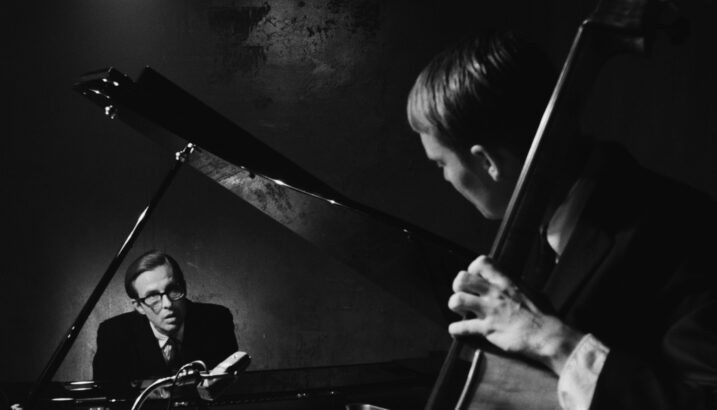
The date is February 21st, but for DIFF enthusiasts it’s not a regular Saturday. That evening the entire screen 1 of the ever-so welcoming Lighthouse Cinema was filled with cinema and jazz admirers gathered together for the Irish premiere of the promising Everybody Digs Bill Evans that had held its world premiere a number of days ago at the Berlinale to rave reviews.
The ambiance in the room that evening was electrifying as minutes before the lights went off and the big screen illuminated it was announced that the award ceremony in Berlin for the Berlinale was taking place at that exact moment and after our screening we will officially have the news if Grant Gee who was up for the Best Director award for Everybody Digs Bill Evans, hence his absence in Dublin that night, has won the prestigious Silver Bear.
As the room grew darker I kept on imagining the buzzing of a room miles away from our seats where an artist was anticipating their name being called out loud and procrastinating their speech. Just as I was turning my phone off for the film, the last message that managed to get through was from my friend who was in Berlin for the festival that said: “You won’t believe this! The director of the film you’re about to watch just won Best Director!” I couldn’t know for sure, but I like to believe I was one of the only people watching it that night aware of the recognition it had just gotten which even further boosted my already high expectations. And the film did not disappoint. A melancholic, yet at moment surprisingly hilarious ode to a broken artist in search of his scattered pieces.
The mastermind behind the poignant script of the film is a known face from Irish cult classics like Adam & Paul and recently behind the success of shows like Conversation with Friends who also happened to be a professor of mine during my short-lived time in UCD as a scriptwriting postgraduate student.
So, on the eve of the Oscars I met with Mark over Zoom to discuss more about Bill Evans coming to life from the edge of Mark's pen, how his writing process has evolved through the years, his remedies for writer’s block and the one movie that already exists, but he wished he could have directed.
How did the project initially find its way to you?
MOH: My memory of it is that I was approached possibly in 2018. One of the two main producers on it, British producer Janine [Marmot], had seen some of my work before, and she decided she wanted to work with me. And she also works with Grant [Gee], director of Everybody digs Bill Evans, all the time.
They had found this book that they were really interested in adapting (Intermission by Owen Martell), which was about Bill Evans. And I have a great interest in music, and I have a great interest in Bill Evans. And so we were put together, and myself and Grant got on very well, so we just decided to press ahead with it.
Sometimes scripts can be written and finalised for a week and sometimes they take years to develop. How long did it take for Everybody Digs Bill Evans to stand on its legs?
MOH: Now, it took its time to get made, because obviously it's not a particularly commercial venture. But that was the length of time - I was approached around 2018 and then I was finished with it at the early stages of COVID. So, yes, pretty long time, but that's quite normal. And definitely not the longest ever. I've had scripts that have been around for about 10 or 15 years.
Did you finish the first draft fully and then kept on going back to it? Or was it more on and off like working on it, then abandoning it for a little to clear your head with some other project and then going back?
MOH: As I remember it, I created the first draft. It’s quite loosely adapted. It doesn't adhere closely to the book. All of the flash forwards are put in.
And so there were a number of drafts, but it was mostly to do with sitting down and discussing things. Sometimes we would get notes back from the BFI who funded the movie. Towards the end, when we were filming in 2024, there were a lot of legal rewriting notes where we were told what we can't do, what we can't say or that we had to change all the names – just for various legal reasons.
During my time in UCD you were one of our guest speakers/professors for our module “Adaptations” that looks into the craftship behind adapting narratives from one medium to another. Everybody digs Bill Evans is based on the novel by Owen Martell Intermission and you’ve tackled book adaptations before with your involvement in Sally Rooney’s Conversations with friends. How was adapting this project different from adapting other books?
MOH: There was a certain connection between the two, and I actually ended up writing both of them at nearly the same time as they overlapped during the start of COVID. They both are incredibly interior novels, although Sally does have more dialogue. There was very little dialogue in the novel that Owen Mantell wrote, and so there was just some sort of invention. You have to find ways of putting all of that interiority on the page. He [Bill Evans] was also a really passive central character, but I was interested in that anyway. I have written passive central characters before. What interests me is what they do to peripheral characters.
So it's more inventive, in a way. There wasn't so much of that with Sally [Rooney]'s stuff. Obviously with her work, it's a fictional world that you're adapting. Whereas here with Bill Evans, you have reality, and then you have the depiction of that reality through a book.
How do you approach the material in any different way if it’s based on real events/people then?
MOH: I just read quite widely, and so I sourced lots of anecdotes and stories from his [Bill Evans] life, and we had to make sure that they had two different sources, so a source couldn't say that we had taken it from them. For instance, that journey to the hospital that he has at the end, that comes from his girlfriend at the time. She wrote this really kooky biography, and she has said for a long time that she wants to make a film about him. But the story of his journey to hospital is told by multiple different people, so I was able to cover that.
You can't just invent a whole different person. Bill Evans is a very beloved person, and there are biographical facts there that you have to stick to. But sometimes you have to construct a storyline to elucidate that further.
Do you feel like when a project tackles reality, there is a certain – not necessarily expectation, but I would say – do you owe something to the real person?
MOH: I've gotten over that. I used to feel that sometimes about projects. But now I feel like you've got to read and understand it. If you have a feeling for the character, that's your thesis, and you've got to put forward your thesis about who they are. So I don't worry about if some other person would go:“I can't believe you described him like this”. My response would be these are the sources I have, and this is what I think of him.
So it's indeed more of an interpretation. And I feel like the audience is smart enough to know this is not truly Bill Evans. It is a depiction of Bill Evans that is based on something. So, it's almost like a separate character on his own.
MOH: Also, the script covers a very short ten months in his life. Yes, we do jump forward, but it's a very short ten months. And actually, it's not about the entirety of his life. What the film is asking – the questions it's asking are, what are the costs of being an improvisational artist? What are the physical, mental costs, and what does it entail? And he says, in the end, it means pushing the world away and learning to think with my hands. That's what the film is about, actually.
There is a divergence between the events described in the book and what really happened in reality which is inevitable when adapting a story for dramatic purposes, but there’s even more of a difference between reality, the book and the film script. There’s one good example you gave during the Q+A after the screening of the film at DIFF - that of the character Ellaine that although with a strong presence in the film and a crucial part of Bill Evans’ life in reality, was absent from the narrative of the book. While doing additional research how do you pinpoint what to alter and in this case include despite its exclusion from the source material?
MOH: The character of Elaine, who is a real-life character, didn't exist in the book. I found it really weird that she has been excised from history in many ways. And I felt that it was really important to put her back in, so I argued the case with the director and he was fine with it.
She was such a colossal character. And also, you needed to find a way to show a different side to Bill Evans. I mean, he hurt a lot of people. {Major Spoiler Alert!} She did kill herself. She did throw herself onto a subway train after he had left her because she couldn't have children, and he met somebody who he had a child with, and that's what he wanted. And in fact, the story, as it goes, he apparently claimed he didn't ask her to leave the house, but what he did was reassuring her she will be fine, and then tried to give her money. And she left the apartment and threw herself under a train. So we've done a much more pared-back version of that. You have to keep reading as widely as possible so you get as much of a view, and then you've got to decide what you want to put in there.
We know that scriptwriting is usually a more “solitary” job and you’re also a script editor as well, an actor too. However, considering Everybody digs Bill Evans is pretty much an Irish-based production, were you involved in the production on set? Were there any last minute changes concerning the script?
MOH: All changes went through me, and I always demand that as part of my contract, changes have got to go through me. If they make any changes in the script, it has to be – first of all, I have to be notified, and second of all, I've got to clear it. It means that you are aware of what changes are going on, and so you can say to somebody that if they change that line, it means something later on in the script won't work. And it's mostly about keeping sense of things and keeping coherence ready.
Like, I was also sent the rushes every day, so I looked at the rushes every day. I visited the set a couple of times, but not much. I was supposed to be in it, can’t remember which role it was, but I ended up getting busy with something else, so I wasn't able to make it down on the day. So, you know, you don't walk away. I don't, anyway. You're still very much connected.
The narrative follows two timelines - 60s & late 70s. There’s a witty “trick” used to make the distinction of the two plotlines easier - colour grading. The 60s are in black and white and when we jump further in time it’s in saturated colour. When you’re writing something that’s not directed by yourself you have to be wary of choices like this which could potentially “limit” the director’s creative control. Was this stylistic choice a part of the script or was this director Grant Gee’s decision? And on that note how much was Grant Gee involved in the process of pre-production?
MOH: It's a stylistically good choice. It had to cut across the narrative very sharply, so you don't have to work out what's going on. The very first page of the script, the explainer, says that this is shot in black and white except for all flash-forwards, which will be in colour. And that came from a discussion that I had with Grant beforehand and he was really in favour of doing this that way. But it's mentioned in the script from the get-go.
I was curious, because I remember that in class we were advised while writing the scripts that if you're not the director yourself, it's not good to give that much description in terms of camera work as it might clash with the director’s own creative vision.
MOH:Yes, I mean, that's not a stylistic choice that I would make on my own. That has to be with either directorial consent or comes from the director. That is very much a maker's choice in a way. But it is something that I was certain could work.
Music obviously takes central stage in the story. How much music was a part of your writing process? Did you listen to the album during it?
MOH: I definitely listened to the music and all of that. I mentioned at the screening [at DIFF] that I wanted to make a script that was about a jazz musician who wasn't playing. But I wanted there to be a musicality to the script. So, in some ways, the scenes are made up of quite mundane conversations about going to Coney Island, yet they need to have a flow to them that feels musical. That's what I was after. And after watching it twice on a big screen now, I am happy with that. But I used to listen to the music as I was doing it, as I was writing.
Considering the essence of the film is about an artist reconnecting with their creativity after a life-altering tragedy, in almost a juxtaposition to the tragedy of the film is that it’s actually quite funny?. How do you manage to balance the tonal shifts between drama and humour?
MOH: It's always been part of my work, that kind of mixture. Adam and Paul has it, Garage has it, even Viva. They all have that juxtaposition of planting the humorous right in the middle of the difficult or the more depressing kind of work. I've always, you know, the kind of playwrights I have liked are people like, you know, Sean O'Casey does it in Juno and the Paycock. It's full of bravura, musical slapstick comedy and absolute tragedy. In the middle of one of the most funny parts of that play, in Act 2 when the party's going on, Mrs. Tancred comes down and gives this massive eulogy for her dead son. I like that. I believe you can situate the two. As long as you're playing it within the confines of the true motivations of your characters, you can do that.
The character of Bill Evans’ father is very funny in it. His mother is very funny in it too. And yet his father also has this absolutely heartbreaking moment with him where he hugs him before he goes upstairs and says “Billy boy” when he's really drunk.
The title Everybody digs Bill Evans is also the title of the record, but not the book. Was this always gonna be the title or did it change during filming/post-production? What was the intention of going with this one instead of Intermission which is not a surprising title considering the plot is very much about an artistic block. Does it have to do with the theory that the phrase “dig it” which was a slang popularized in US jazz culture, but is linked to Irish immigration, as almost a pun that the production is very Irish dominant?
MOH: I called it the Bill Evans project for a long time. That was just a name because I didn't like Intermission. And there was also the famous Irish movie Intermission [with Cillian Murphy]. So we couldn't really call it that if we were looking for Irish financing. So his second album is called Everybody Digs Bill Evans and I think it's such a great title. I can't honestly say that the “pun” and link to the jazz slang and Irish influence was consciously in my mind, but I do think it's, in general, a more commercial title.
Different scriptwriters have different writing processes. How has yours changed through the years? Does it depend on the particular project you’re writing? Do you normally listen to music on repeat or do you prefer quiet?
MOH: For me as a writer, and others are different, each project demands a new process. I do have things that always remain the same though, like most of the time I tend to write out of sequence. I can jump around scenes and after, I would have lists of things that I have to stitch together and see how they work. But with the Bill Evans project, I didn't do that and I wrote it straight through. Now, obviously, there was the template of the book and the template of the flash forwards. But that meant that there was a huge amount of balancing to do. So things moved within the script. But I wrote a first, well, I would say not my first, but my 0.7% draft. And then I did a lot of moving around of things, trying to settle the tone of it. And then that was the first draft. So that was a different experience in a way.
There are some projects that are personal to me and not adaptations of any kind. They would be written all over the place, like written completely out of sequence because I would know sections of it. I would have to write them to find the characters, and then I would put them back in and see how it can flow to that. Sometimes I wouldn't know how a story ends, so I have to figure out how it ends as I write along. But with this one, I didn't have to do that.
With this project you obviously listened to the jazz album, but do you normally listen to music on repeat while you write or do you prefer quiet?
MOH: I would say that normally I don't do that. I have these great noise-cancelling headphones that I put on, and I just turn on the noise-cancelling, not with music on, so I can't hear anything, just the dialogue echoing. I just somehow have to sensorially deprive myself, and then I can sit into it. But everybody has their own way.
We often say that whenever a film premieres/is out, it no longer belongs to the filmmakers, it’s now a property of the audience. When does a script stop belonging to a scriptwriter?
MOH: When you hand it over to the producers. That's it. Well, actually, it never belongs to you. I mean, legally, it's never yours. Even if it's a story about your life, once you sell it, it doesn't belong to you anymore. Like, literally, you do not have any rights over it. Philosophically, it's always a part of you. Legally, producers. But it is superseded by what it becomes, you know? And that's something that's really interesting to watch. And I do agree with you. An audience teaches you whether a film has any merit or not. You can think it's brilliant in the edit suite, but you just don't know how an audience is going to react. Like, for instance, I think people were surprised by how the audience reacted to Bill Pullman’s performance and how much they loved him. And I don't think we quite knew that in the edit suite. He's so brilliant.
There were certain moments that also hit much harder in front of the audience. Like, when Elaine says “I love you!” and he says “Thanks!”, the audience goes “Whoa!”. In Berlin, especially, they were very vocal.
Speaking of memorable lines, one of my favourite moments from the film is when Bill Evans’ mother says “Sometimes an intermission is part of the music”. During the screening I remember that line genuinely had a few people kind of exclaiming. Was it a part of the book, that phrase?
MOH: No.
Did you come up with that?
MOH: As far as I know, yes.
I thought it was a brilliantly touching, yet clever quote as it sums up the essence of the film so well. Every artist goes through these periods where they’re convinced they won’t be able to create ever again. Have you got any remedies for “intermissions” or aka a writer's block? Do you like to leave what you’re working on on the side for a little to clear your head? Do you recommend focusing on writing something else, not writing at all? Aimless walking?
MOH: I did have a period in my life where I didn't write at all, pretty much from late 2007 till, like, 2010. It was a three-year period. And part of it was my partner died, and I just didn't believe a word that I put down. And actually I had to re-teach myself. The only way to get through it is to write your way through it. Simple as that.
Have you ever revisited projects you’ve written during this period to see if they actually were as you perceived them at the time?
MOH: This is a funny one. I wrote quite a lot during that period, actually, even though I said I wasn't writing. I just didn't deliver anything, because I thought it was all terrible. So I went back and read two scripts lately. One of them is about an older Irish homeless man in London. And I wrote it in something like nine days, very quickly. I didn't re-write it. I didn't look back at it. I just got to the end and I thought it was hopeless, and I put it away. I don't know why I read it lately, but I was really taken with it. So I sent it to a couple of producers who absolutely loved it.
Sometimes, other people may argue other things, I believe with writer's block, it's a collapse of self-belief, basically, brought on by either depression or whatever people go through in their lives. That can be hard to get through, because if you don't believe in anything, you're not going to be out there trying to sell your work. You won't take on work because you feel you won't be able to fix it, or finish it. So, luckily I've come through that. But you have to ride through it. Writing your way through it is the answer. Even if it’s painful, you have to do it.
You’re pretty much a multitasking artist as you’re also an actor. How does this alter the way you write dialogue for instance? What’s something you wish scriptwriters who are not actors themselves knew when crafting the script?
MOH: Sometimes there's clunkiness in scripts. Sometimes an author puts their own voice too much into it, and so you see them putting their own thoughts into a character's mindset. But if I'm sent a script, I'm reading it, especially as an actor, in a different way.
I do think that writing and acting comes from the same part of my brain, the creativity that's needed. Both of them are an exploration of themes and characters through image and dialogue. That's how I would build a character as an actor. That's how I write characters as a writer. So it comes from the same place.
Is there a book or any source material you always wanted to adapt?
MOH: There was a short story by Milan Kandira called The Hitchhiking Game, but we could never get the rights for it. And I still would love to adapt it, but he had specified that he didn't ever want any of his work after The Unbearable Lightness of Being ever to be made into a film again, so we couldn't possibly.
The Oscars are tonight [this interview took place on March 15] and for that matter is there a recent movie you’ve seen where the script jumps out of the screen?
MOH: Sentimental value. Anything by Joachim Trier is just absolutely stunning. That's why it was so great to have Anders [Danielsen Lie] as our Bill Evans.
I was gonna ask about him as well. At what point he was attached to the project?
MOH: Pretty much at COVID times. I did finish the script during COVID time, then I went out to him, and then he accepted it towards the end of COVID times, and then the financing started to try and get it into place.
Is there anything you’re currently working on or anything you’ve worked on that you hope could one day see the big screen?
MOH: I've got this film adaptation of a play that I wrote called Conversations After Sex, which I'm actually going to direct myself. Not this year, I would say. And I've got another number of commissions as I also do script doctoring and all of that. So I've got films going into production that my name will never be attached to, which is kind of fun.
To wrap this up I ask my favourite question I ask everyone I interview which is if you could write/direct any already existing film, what would it be?
MOH: Persona! I’ve watched this film about a 100 times, it's part of my life, I absolutely love it.
Post a comment